OpenClaw vs NanoClaw: Which AI Agent Framework Is Right for Your Business?
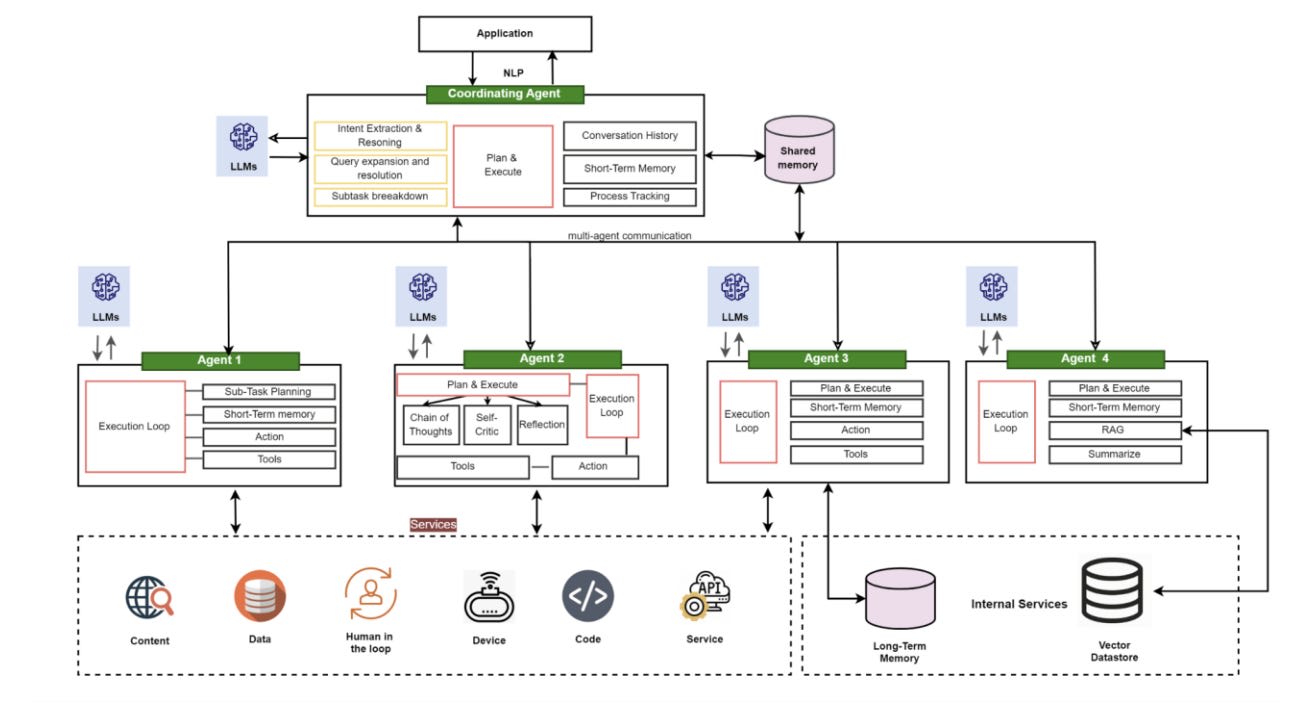
Two open-source AI agent frameworks are dominating the conversation in 2026: OpenClaw — the feature-rich, battle-tested powerhouse with 246,000+ GitHub stars — and NanoClaw — the radical minimalist challenger built in a weekend that Singapore’s Foreign Minister Dr. Vivian Balakrishnan used to build his famous agentic AI “second brain.” Both are open-source, both run locally, and both connect AI agents to your messaging and workflows. But they represent two fundamentally different philosophies — and choosing the wrong one for your organisation could mean either drowning in complexity or being locked out of the integrations you need.
What is OpenClaw?
OpenClaw is the incumbent — a mature, modular, full-featured personal AI agent framework. It functions as a local gateway that gives AI models direct access to files, scripts, browser automation, and over 50 third-party integrations including smart home devices, productivity suites, music platforms, and databases. It supports multiple LLM backends including Anthropic Claude, OpenAI, and local models via Ollama.
OpenClaw at a glance:
- Codebase: ~430,000–500,000 lines of code, 53 configuration files, 45+ dependencies
- Integrations: 70+ native, 40,000+ community skills
- LLM support: Multi-model (Claude, GPT-4, local models)
- Security model: Application-layer (allowlists, pairing codes, permission checks)
- Cost: $300–$750 to self-host at scale
- Setup complexity: High — fast to start, complex to customise deeply
What is NanoClaw?
NanoClaw was built by Gavriel Cohen — co-founder of AI agency Qwibit — after he discovered security and architectural concerns in OpenClaw. His response was radical minimalism: a framework with only a few hundred lines of core code, readable in under 8 minutes, with OS-level container isolation baked in from day one. It caught fire on Hacker News, racked up tens of thousands of stars, and within six weeks landed a partnership with Docker. It’s also the framework behind the viral “diplomat’s second brain” that made global headlines — and the same LLM Wiki pattern that powers compounding knowledge systems. If you want to understand how RAG and LLM Wiki differ from each other and why it matters for organisations, read our deep-dive here.
NanoClaw at a glance:
- Codebase: ~500 lines of core code — fully auditable in minutes
- Integrations: Core messaging (WhatsApp, Telegram, Discord, Slack, Signal)
- LLM support: Primarily Claude (Anthropic)
- Security model: OS-level container isolation (Docker / Apple Container) — each agent runs in its own sandboxed container
- Cost: $5–$50 self-hosted
- Setup complexity: Low — zero config files, conversational setup via Claude Code
OpenClaw vs NanoClaw: Head-to-Head
| Dimension | OpenClaw | NanoClaw |
|---|---|---|
| Codebase size | ~430,000+ lines | ~500 lines |
| Security boundary | Application-layer | OS-layer container isolation |
| Configuration | 53 config files, high complexity | Zero config — conversational AI setup |
| LLM backends | Multi-model (Claude, GPT, local) | Claude-first |
| Integrations | 70+ native, 40K+ community | Core messaging platforms |
| Multi-agent support | Partial | Full agent swarm support |
| Auditability | Not feasible (too large) | Fully readable |
| Cost (self-hosted) | $300–$750 | $5–$50 |
| Best for | Broad integrations, multi-LLM | Security-first, regulated environments |
What This Means for Your Business
Choose OpenClaw if you need breadth
OpenClaw is the gold standard for teams that need a fully-featured AI assistant integrated across many platforms — CRMs, smart office systems, productivity tools, and custom workflows. If your organisation runs on a diverse SaaS stack and you need an AI agent that can touch all of it, OpenClaw’s 70+ native integrations and 40,000+ community skills make it the pragmatic choice. It’s also the right call if your team uses multiple LLM providers and wants the flexibility to switch models without rebuilding infrastructure.
Choose NanoClaw if you need security and control
NanoClaw is the right choice for organisations where data sovereignty, auditability, and security are non-negotiable. Because every agent runs in its own OS-level container, even a compromised or misbehaving agent cannot touch your host machine or other agents’ data. For companies in finance, legal, healthcare, government, or regulated industries — or for executive teams handling sensitive strategic information — NanoClaw’s architecture is the safer foundation. Its Docker partnership further cements this for enterprise deployments.
NanoClaw also wins on cost: at $5–$50 self-hosted versus OpenClaw’s $300–$750, it’s an order of magnitude cheaper for lean teams who only need core messaging integrations and a Claude-powered agent.
The hidden advantage: auditability as a trust signal
There’s a dimension that matters deeply for enterprise AI adoption that neither framework discusses loudly enough: can your IT/security team actually read the code? With OpenClaw’s 430,000+ lines and 45+ dependencies, a full audit is practically impossible. With NanoClaw’s ~500-line core, your team can understand exactly what the agent can and cannot do. In regulated environments or with boards that ask hard questions about AI risk, this transparency is a genuine competitive advantage — not just a technical nicety.
The hybrid path
Some organisations are starting to run both: OpenClaw for broad, outward-facing integrations (customer support, marketing automation, productivity tools) and NanoClaw for sensitive internal workflows (executive knowledge management, compliance monitoring, strategic research). This mirrors the same hybrid pattern emerging in knowledge architecture — where RAG handles the broad, real-time queries while LLM Wiki manages high-stakes institutional knowledge.
The Bottom Line
OpenClaw and NanoClaw aren’t really competing — they’re solving different problems. OpenClaw is the Swiss Army knife: broad, powerful, and integration-rich. NanoClaw is the scalpel: precise, secure, and fully transparent. The question isn’t which is better in the abstract — it’s which is better for your threat model, your stack, and your team’s capacity to manage complexity.
If you’re running sensitive operations, executive workflows, or building the kind of compounding institutional knowledge system that Vivian Balakrishnan built for diplomacy, NanoClaw is your foundation. If you need AI agents embedded across a broad enterprise SaaS ecosystem, OpenClaw is the more pragmatic path.
Not sure which framework fits your organisation?
Choosing the right agentic AI foundation isn’t just a technical decision — it’s a strategic one. The wrong choice means either over-engineering a simple need or under-securing a sensitive one. We help organisations map the right architecture for their specific workflows, risk profile, and growth stage.
Contact us at [email protected] to start the conversation.